|
Hybridization as a path to success? Adaptive hybridization in willows in face of biotic and abiotic pressures.
We are looking for an enthusiastic candidate to join a project funded by Czech Science Foundation that aims at exploring if the hybridization in plants is fuelled by the adaptive value of hybrids in face of biotic and abiotic selection pressures. The project focuses on willows as a diverse and dominant key-stone plant genus to explore the distribution of their hybrids in natural communities and to dissect their interactions with insect herbivores and environment along elevational gradients.
0 Comments
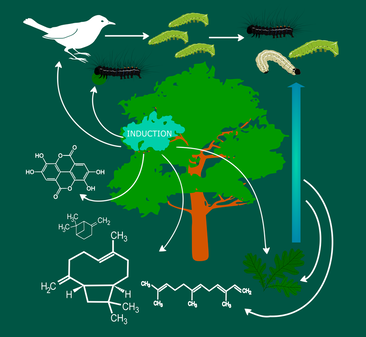
Why are highland plants chemically distinct? Find out in our new paper by Martin and Terka!9/2/2022 Plants produce an astonishing diversity of chemical compounds that help them to cope with various types of stress. Here we used willows growing along an elevational gradient to compare various aspects of chemical diversity among plants exposed to different environmental conditions.
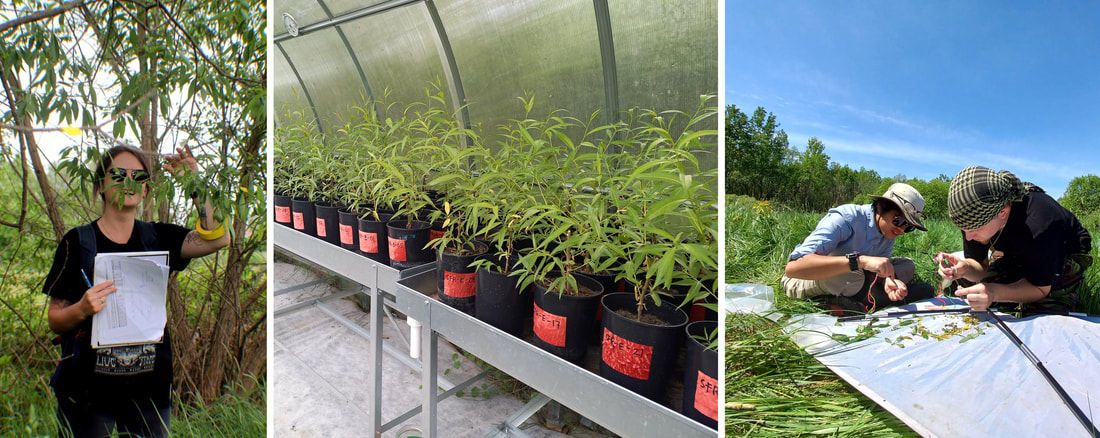 Our team is back in the field and starting new experiments! In these projects, we aim at answering three exciting questions:
Ezgi Ogutcen has joined our team as a new postdoc. She will expand our projects towards the tropics as she will study the evolution of both temperate and tropical plants from the willow family. We hope that this project will reveal how gradients in biotic interactions and abiotic conditions shape the chemical diversity in plants.
Loci lacking molecular data for a large number of samples are commonly excluded in phylogenomics analyses, even though they may still contain valuable information. We investigated how the missing data impacts branch support and topology using the target enrichment approach.
We have published a paper that shows how phytochemical beta-diversity affects insect specialization!
Quantity and specialisation matter: Effects of quantitative and qualitative variation in willow chemistry on resource preference in leaf-chewing insects |
New PublicationsMarinček P., Léveillé-Bourret É. , Heiduk F., Leong J.V , Bailleul S.M., Volf M., . Wagner N.D. (2024) Challenge accepted: Evolutionary lineages versus taxonomic classification of North American shrub willows (Salix). the American Journal of Botany, https://doi.org/10.1002/ajb2.16361
Archives
June 2024
|



 RSS Feed